Voice Cloning vs Text to Speech: What's the Difference?
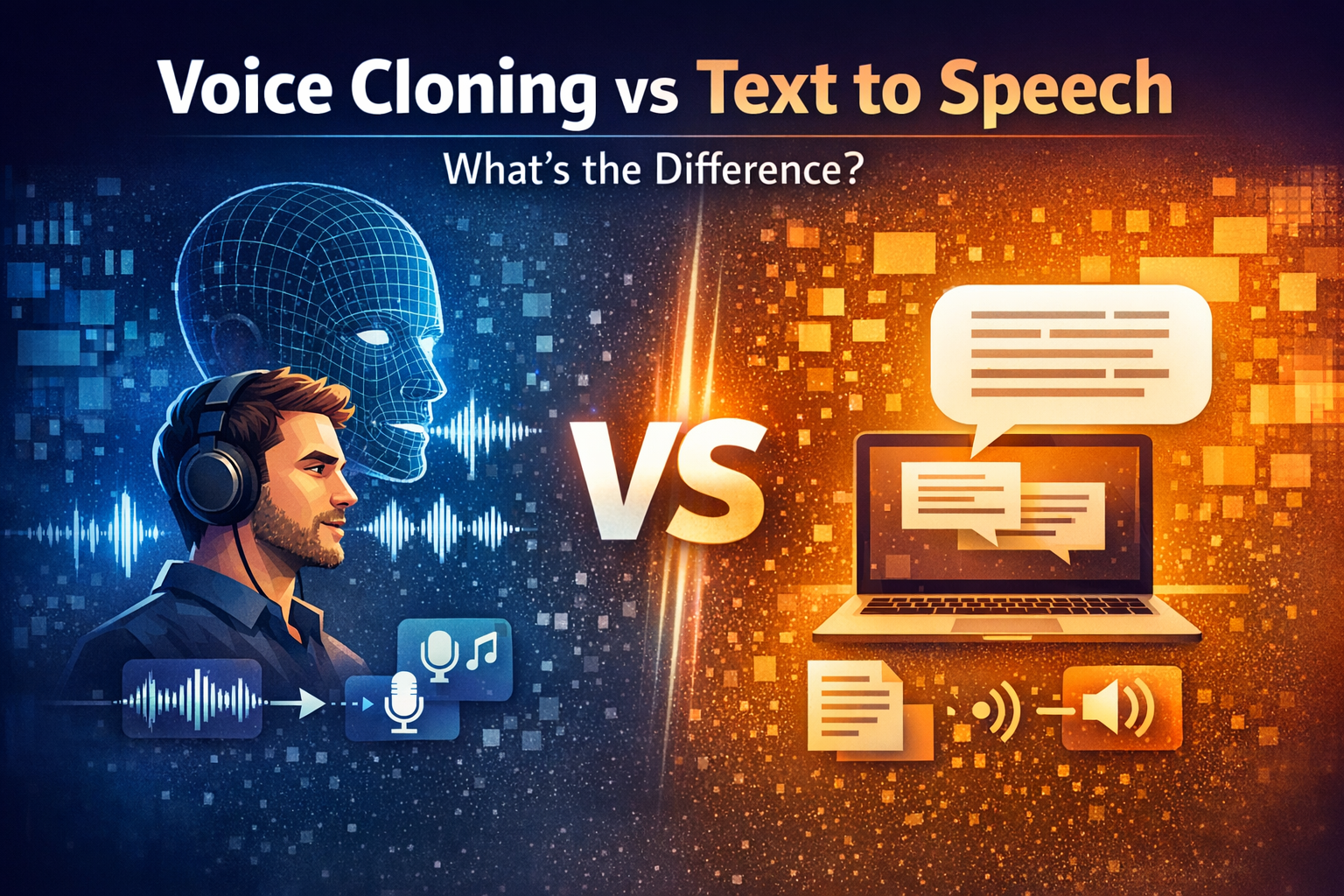
If you are exploring AI voice tools, one of the first questions you will run into is this: what is the difference between voice cloning and text to speech?
At first glance, they can look similar. Both technologies generate speech with AI. Both can help creators, streamers, musicians, developers, and content teams produce audio faster. And both are often mentioned in the same conversations about modern voice tools.
But they are not the same thing.
Understanding the difference between voice cloning vs text to speech matters because each tool solves a different problem. If you choose the wrong one, your workflow can become slower, more expensive, or more complicated than it needs to be. If you choose the right one, AI voice tools can save time, speed up production, and open up new creative options.
In this guide, we will explain what text to speech is, what voice cloning is, how they work, when to use each one, and how to decide which is better for your needs.
What Is Text to Speech?
Text to speech, often called TTS, is a technology that converts written text into spoken audio.
You type words into an app, choose or generate a voice, and the software reads the text out loud.
Modern AI text to speech tools are much more advanced than older robotic speech systems. Instead of sounding flat and mechanical, newer models can produce more natural pacing, clearer pronunciation, and smoother delivery.
Text to speech is commonly used for:
- Video voiceovers
- Social media narration
- YouTube content
- Tutorials and explainers
- Accessibility support
- Script testing
- Prototyping dialogue
- Draft audio production
The main goal of text to speech is simple: turn text into usable speech quickly.
What Is Voice Cloning?
Voice cloning is a technology that creates a synthetic version of a specific voice identity.
Instead of only converting text into a general AI-generated voice, voice cloning aims to reproduce the characteristics of a particular speaker. That includes vocal tone, style, timbre, rhythm, and overall identity.
Voice cloning is often used for:
- Personalized voice output
- Creator branding
- Character voices
- Content localization workflows
- Experimental music and audio projects
- Maintaining a consistent vocal identity across content
The key idea is this: voice cloning is about whose voice it sounds like.
Voice Cloning vs Text to Speech: The Simple Difference
The easiest way to understand voice cloning vs text to speech is this:
- Text to speech focuses on converting written text into spoken audio.
- Voice cloning focuses on reproducing a specific voice identity.
So while both can generate speech, they answer two different questions.
- TTS answers: How do I turn text into audio?
- Voice cloning answers: How do I make that audio sound like a specific voice?
How Text to Speech Works
At a high level, text to speech follows a three-step process.
1. The software analyzes the text
The system reads the words, punctuation, structure, and sometimes context of the sentence. This helps it understand where pauses should happen, which words should be emphasized, and how the line should flow.
2. The AI predicts speech patterns
The model determines how the sentence should sound when spoken. That includes pacing, intonation, and rhythm.
3. The app renders the audio
Finally, the system generates the actual speech output, which can then be previewed, exported, or used inside a creative workflow.
How Voice Cloning Works
Voice cloning typically adds another layer to speech generation.
1. The system learns the voice identity
The model analyzes audio examples of a specific voice. It picks up on vocal qualities such as tone, inflection, pronunciation style, and overall character.
2. The voice profile is created
The system builds a voice representation that can be used later for generating new speech.
3. New speech is generated in that voice
Once the voice is available, the software can produce spoken lines that sound closer to that specific vocal identity.
When to Use Text to Speech
Text to speech is usually the best choice when your priority is speed, convenience, and fast iteration.
Use TTS when you want to:
- Generate a quick voiceover
- Test a script
- Create draft narration
- Make short-form content faster
- Prototype dialogue
- Turn text into spoken content without recording manually
If you do not need a specific voice identity, text to speech is often the simplest and most efficient solution.
When to Use Voice Cloning
Voice cloning is usually the better choice when vocal identity matters.
Use voice cloning when you want to:
- Create speech in a recognizable voice style
- Maintain a consistent voice identity across projects
- Experiment with branded voice content
- Personalize audio output
- Explore creative voice workflows beyond standard narration
Which One Is Better for Creators?
There is no universal winner in voice cloning vs text to speech because the better choice depends on what you are trying to do.
Text to speech is better for:
- Fast voiceovers
- Beginner-friendly workflows
- Quick revisions
- Content drafts
- Efficient script testing
Voice cloning is better for:
- Personalized output
- Preserving vocal identity
- Creative experimentation
- Branded voice content
- Voice-specific creative control
A lot of users eventually use both. They start with TTS because it is faster and easier. Then, when identity and style become more important, they explore voice cloning.
Voice Cloning vs Text to Speech for YouTube
For YouTube creators, the choice often depends on the type of content. If you are making explainers, tutorials, commentary drafts, list videos, or short educational content, text to speech can be the fastest solution.
If you want a stronger vocal identity, more recognizable delivery, or a unique AI voice presence across your channel, voice cloning may make more sense.
Voice Cloning vs Text to Speech for Streamers and VTubers
For streamers and VTubers, the choice depends even more on identity. If you need quick spoken output, alerts, or content drafts, TTS can be enough.
If your voice persona is part of the performance, cloning becomes more interesting because it supports a more specific vocal style.
Voice Cloning vs Text to Speech for Music
In music and experimental audio work, TTS can be useful for rough spoken elements, vocal sketches, or synthetic narration. Voice cloning becomes more relevant when the identity of the voice matters as part of the creative result.
Pros and Cons
Text to Speech
Pros
- Fast to use
- Beginner-friendly
- Ideal for drafts and quick content
- No recording setup needed
- Good for script iteration
Cons
- May feel less personal
- Not focused on a unique voice identity
- May not match a highly specific vocal style
Voice Cloning
Pros
- More personalized output
- Useful when vocal identity matters
- Stronger branding potential
- Better for voice-specific workflows
Cons
- Can be more complex than basic TTS
- May require more setup
- Not always necessary for simple narration
Can Voice Cloning and Text to Speech Work Together?
Yes. In fact, many modern AI voice workflows combine them.
A common pattern looks like this:
- Write the text.
- Use speech generation to turn the text into audio.
- Apply or generate that speech using a specific voice identity.
How to Choose Between Voice Cloning and Text to Speech
If you are still deciding between the two, ask yourself these questions.
- Do I just need speech from text? — Start with text to speech.
- Does the output need to sound like a specific voice? — Explore voice cloning.
- Do I care more about speed or identity? — TTS for speed, voice cloning for identity.
- Am I creating drafts or building a recognizable voice presence? — TTS for drafts, voice cloning for distinctive content.
Final Thoughts
When people search for voice cloning vs text to speech, they are usually trying to answer one practical question: which AI voice tool do I actually need?
The answer is simpler than it first appears.
If you want to turn written text into spoken audio quickly, use text to speech.
If you want that spoken audio to sound like a specific voice identity, use voice cloning.
Both technologies are useful. Both can save time. Both can improve creative workflows. But they are designed for different priorities.
The best way to understand which one fits you is to try both in real projects and see where each one helps most.
FAQ
Is voice cloning the same as text to speech?
No. Text to speech converts written text into spoken audio. Voice cloning focuses on reproducing a particular voice identity.
Which is better: voice cloning or text to speech?
Neither is always better. Text to speech is better for fast speech generation. Voice cloning is better when identity and personalization matter.
Can text to speech sound like a real person?
Modern AI text to speech can sound much more natural than older systems, but it is still different from cloning a specific voice identity.
Do creators need both TTS and voice cloning?
Not always. Many creators start with TTS and add voice cloning later if they need more personalized output.